...
The HUD contains the essentials for the element, split in two zones : Identification and State Summary.
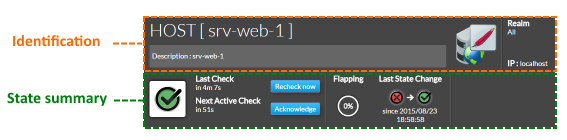
Identification
- Element type : Host or Cluster
- Element Name
- Element description
- Element icon
- The icon is determined by the first host template that is displayed inthe summary tab.
- It there is no template attached to your host, or templates
attachedhave - attached have no icon defined.
So in our srv-web-1 the icone displayed is the apache one because the first template is the apache host template
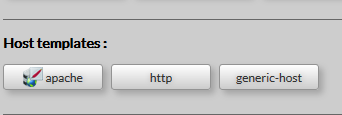 Image Added Image Added
- The realm to which the element belongs
- Address IP of the element.
- A button to refresh host detail view
- All data displayed brought back again from the Shinken server
|  Image Removed Image Removed |
State Summary
...
This zone will provide the status, details on this status, and some of the command to manage the status of the chosen element.
 Image Added
- Current element status (like status widget with context)
- The time elapsed from the last check
| and
the next - and when the scheduled check
| for the element- will occured.
- Click this button schedules an instant check
- Click this button opens a modal form to acknowledge the current status of the host.
The acknowledgement informs that the current status has been seen by somebody,
this is why a reason in form is required.
| 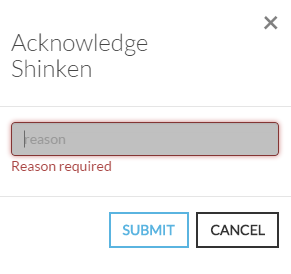 Image Removed
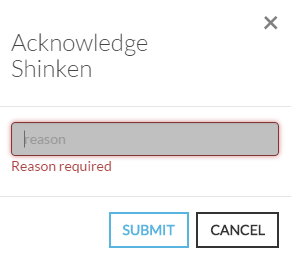 Image Added Image Added- A gauge informs if the element is flapping and how
- The last zone on the right, informs the user when the state changed.
It
| precise - precises the old and new status and the exact date and time.
| Image Removed |
|---|
...
| Info : The HUD name comes from devices used in piloting fighter planes displayed on transparent screen facing the driver or directly in the helmet visor. |
|---|