...
How Are Active Checks Performed?
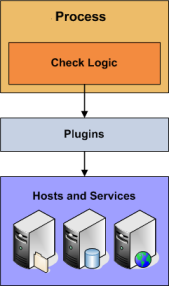
Active checks are initiated by the check logic in the Shinken Enterprise daemon. When Shinken Enterprise needs to check the status of a host or a check, it will execute a plugin and show the information about what needs to be checked. The plugin will then check the operational state of the host or check and report the results back to the Shinken Enterprise daemon. The scheduler daemon will process the results of the host or check and take the appropriate action if necessary (e.g. send notifications, ask for event handlers, etc). | 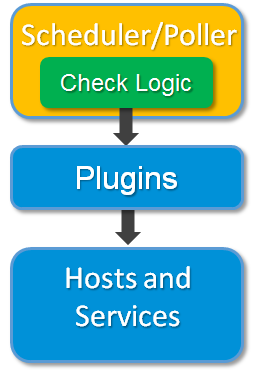 |
When Are Active Checks Executed?
...
Passive checks are also used when configuring :ref:`distributed <advanced/distributed>` or :ref:`redundant <advanced/redundancy>` monitoring installations.
How Passive Checks Work
...
Here's how passive checks work in more detail.
The processing of active and passive check results is essentially the same. This allows for seamless integration of status information from external applications with Shinken Enterprise. | 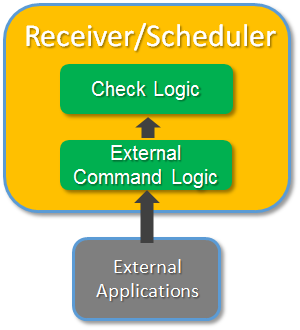 |
Enabling Passive Checks
In order to enable passive checks in Shinken Enterprise, you'll need to do the following:
...