Generally speaking, the aim of a Dashboard is to contain all information that will help you to monitor a bunch of elements, a concept or whatever you decide. It is only a visual container which will help you to be more efficient in your monitoring tasks.For example, you can dedicate a Dashboard to monitor an ERP, containing all information that may help you to be sure that the ERP of the company is running well:
- Summary status of important elements (like hosts, database,fire wall, ...)
- The complete map of the ERP elements displaying dependance relationship between elements.
- In case the ERP is down, the list of roots problems that need to be investigated first.
- Graphics, SLA, ...
OVERVIEW
A dashboard is always linked to a tile of the hive.
- You can access to a dashboard by clicking on the tile representing it in the hive.
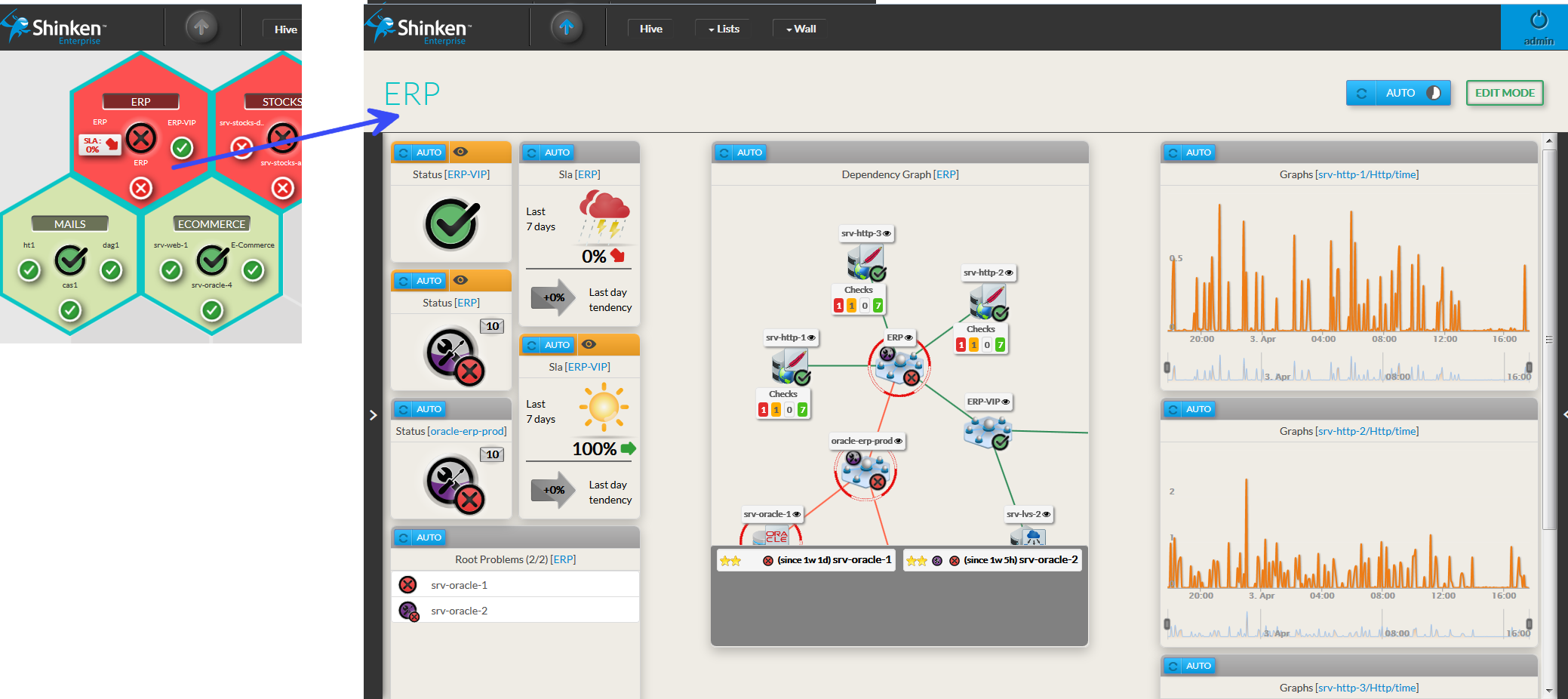
In our exemple, the ERP dashboard consists in 10 boxes that contain information of the concept we want to monitor.
- We call these boxes Widgets (see widgets chapter for more details).
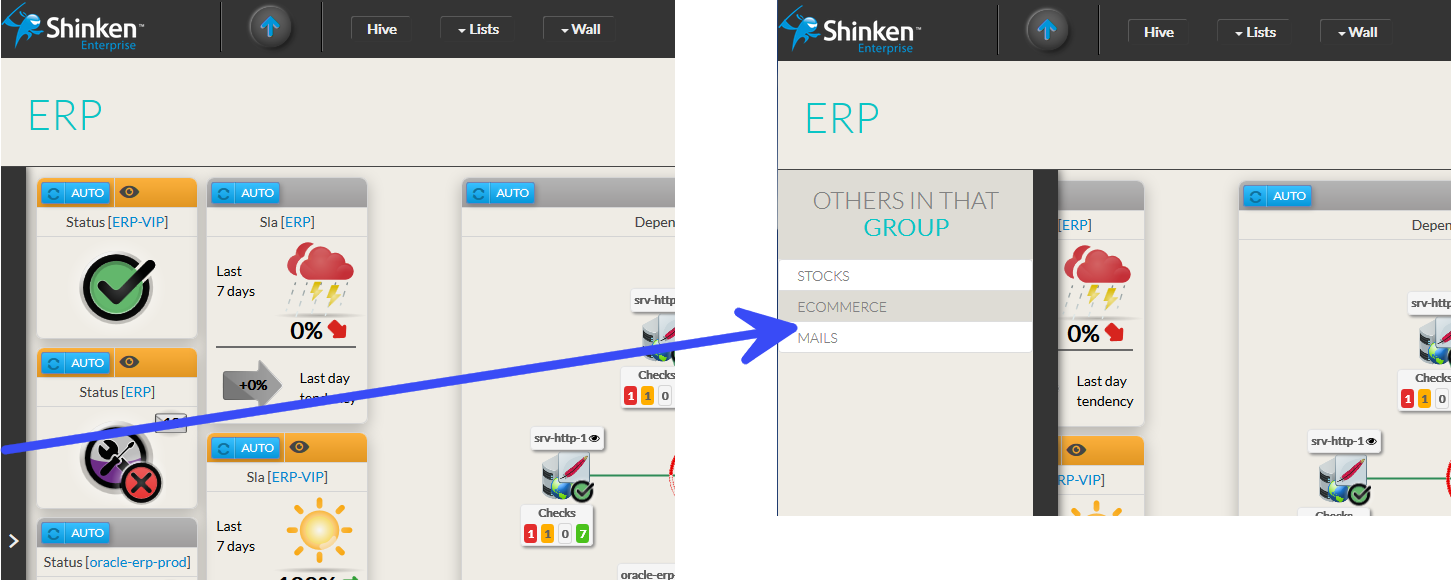
You can easily switch between dashboards of the same color group.
- Click on the left border of the dashboard.
- The list of dashboards belonging to the group will appears automatically.
A Dashboard has 2 modes:
- Visualization (view monitoring information)
- Edition (organize the dashboard)
When you open a dashboard, you are in Visualization mode as default.
Visualization mode
Each widget will be updated every minutes.
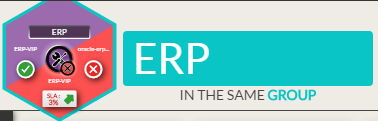
Preview the tile that summarizes the dashboard
- The tile present in hive is displayed on top left
- The tile is update in realtime after each modification
- Its behavior is exactly the same as that described in the chapter Hive
| Panel |
|---|
|
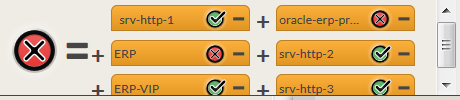
The calculation is displayed graphically:
- Each widget used to calculate status and context is displayed to the right of the tile as a thumbnail containing:
- Its name
- Its status/context
- a "minus" button to remove the thumbnail quickly
- The result status will be the worst state in the list of widgets.
- If too many widgets make up the status and can not be displayed in the area, a scrollbar will be added.
- Each widget used to calculate status and context is displayed to the right of the tile as a thumbnail containing:
| Panel |
|---|
|

| Panel |
|---|
|
Auto Reload
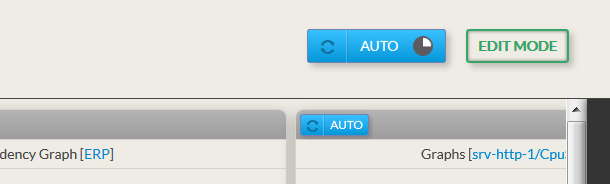
By default, the refresh is automatic and will occur every 60 secondes.
- When in automatic mode, the button is in blue.
- Next to auto, the timer displays the remaining time to the next reload.
| Panel |
|---|
|
No Reload
It may be useful to prevent refreshing a dashboard for analyzing current data:
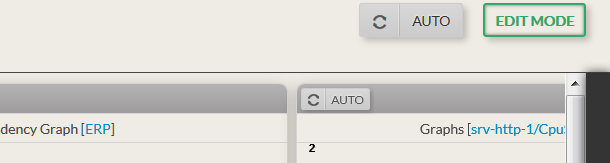
- You can deactivate the refresh by clicking on Auto
- The button and all similar button in widgets will become grey.
| Panel |
|---|
 |
Force a Reload
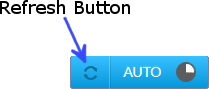
- Click on the left part of the auto button (the refresh button)
| Panel |
|---|
 |
Enter in Edit Mode
- Click the “edit button” on the top left corner.
| Panel |
|---|
|

Edit Mode
You can organize the dashboard as you want : changing the layout of widgets, add widgets,...

Change a tile in edit mode
| Panel |
|---|
|
The edit mode includes some specific access:
On the top left corner:Change the name of the
dashboard
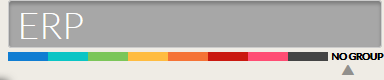
- Click on the name, type the new name and click outside of the grey box.
| Panel |
|---|
 |
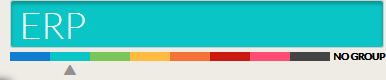
Change the color
of
the dashboard
- Just click on the color you want to set or set it to no group.
- The triangle under the color will show you which one is selected.
- The background color of the title will also change.
- On the top right corner:
- OK: Leave the edit mode and validate all modifications done on the dashboard.
- Cancel: Leave the edit mode, but modifications won’t be taken into consideration.
Move widgets
- Go over a widget and simply drag it to a new location.
While dragging the widget, the other widgets will move down to make place.
| Panel |
|---|
|
Add a widgets
- First, in the top bar, click on a widget type.
It will be highlighted in blue.
You can scroll using left and right arrow to select the widget you are looking for.
Clicking on the “+ ADD” button located on the top of the blue area, will add the widget on the Dashboard.
A new widget will always appears on the right of the Dashboard, sticked to the top.
Depending on the widget type, you will have an empty box or the default view.
To be operational, the new widget needs to be configured (a very easy task : see widgets chapter)
.
| Panel |
|---|
|
Move widgets
- Go over a widget and simply drag it to a new location.
While dragging the widget, the other widgets will move down to make place.
| Panel |
|---|
|

Resize a widget
- Some widgets are resizable
- :
- 360
- Dependency Graph
- Root problems
- Graphes
- Web page
- They will be surrounded by a blue border.
- When placing the mouse over, a blue triangle will also be displayed in the bottom right corner.
- To initiate the resize, place the mouse on the border of the widget, click and move the mouse to the new size.
- Each widget as a minimum size
| Panel |
|---|
|

Save or cancel the modifications
Your changes will not be taken into account until you validate them.
- Button OK: Leave the edit mode and validate all modifications done on the dashboard.
- Button Cancel: Leave the edit mode, but modifications won’t be taken into consideration.
| Panel |
|---|
|
- If at least one change has been made, a confirmation window will be displayed
| Panel |
|---|
|
| |
| |
|
|
|
|
| |
|
|